The "AI adopter bubble" is painfully real
July 9, 2026
This blogpost was originally written in early 2026
I personally receive incredible results from LLM tools for around $250 a month (claude max && gemini pro). I’ve built more than I have in years. Satisfied more consulting client requests at a reduced cycle time per request. My ROI on these tools are a at a multiple high enough that I will not second guess the value.
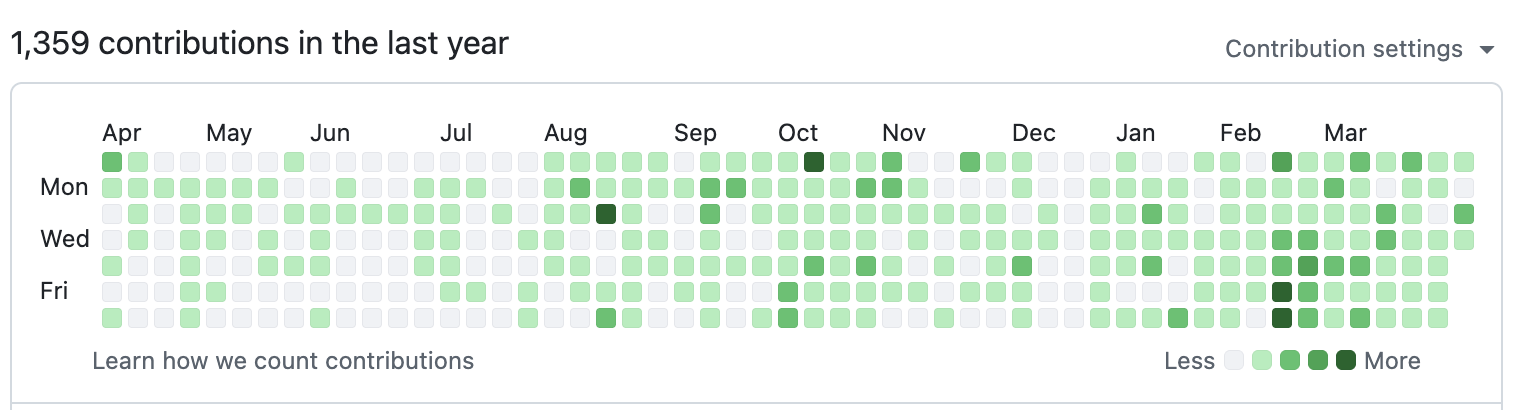
I have been using these tools since Github Copilot’s release in Oct 2021. I was enthusiastic about DALLE, quickly hopped onto ChatGPT, started using cursor extremely early, and have quickly adopted claude code into my daily workflow. I am now realizing that I am probably 90th percentile or greater in competency when using these tools. Most people haven’t interacted with these tools in a significant capacity at all.
You have to think about it in simple terms; you want users who code outside of work/school for fun - and among that cohort - willing and open to dive into the endless world of slop and overhyped sales pitches to cut through the noise and get real results.
Even if you include non professional programmers that vibe code, that is a minuscule fraction of the tech worker population. Some localities, such as SF bay area, Seattle, Boston, or NYC has much higher adoption numbers than elsewhere.
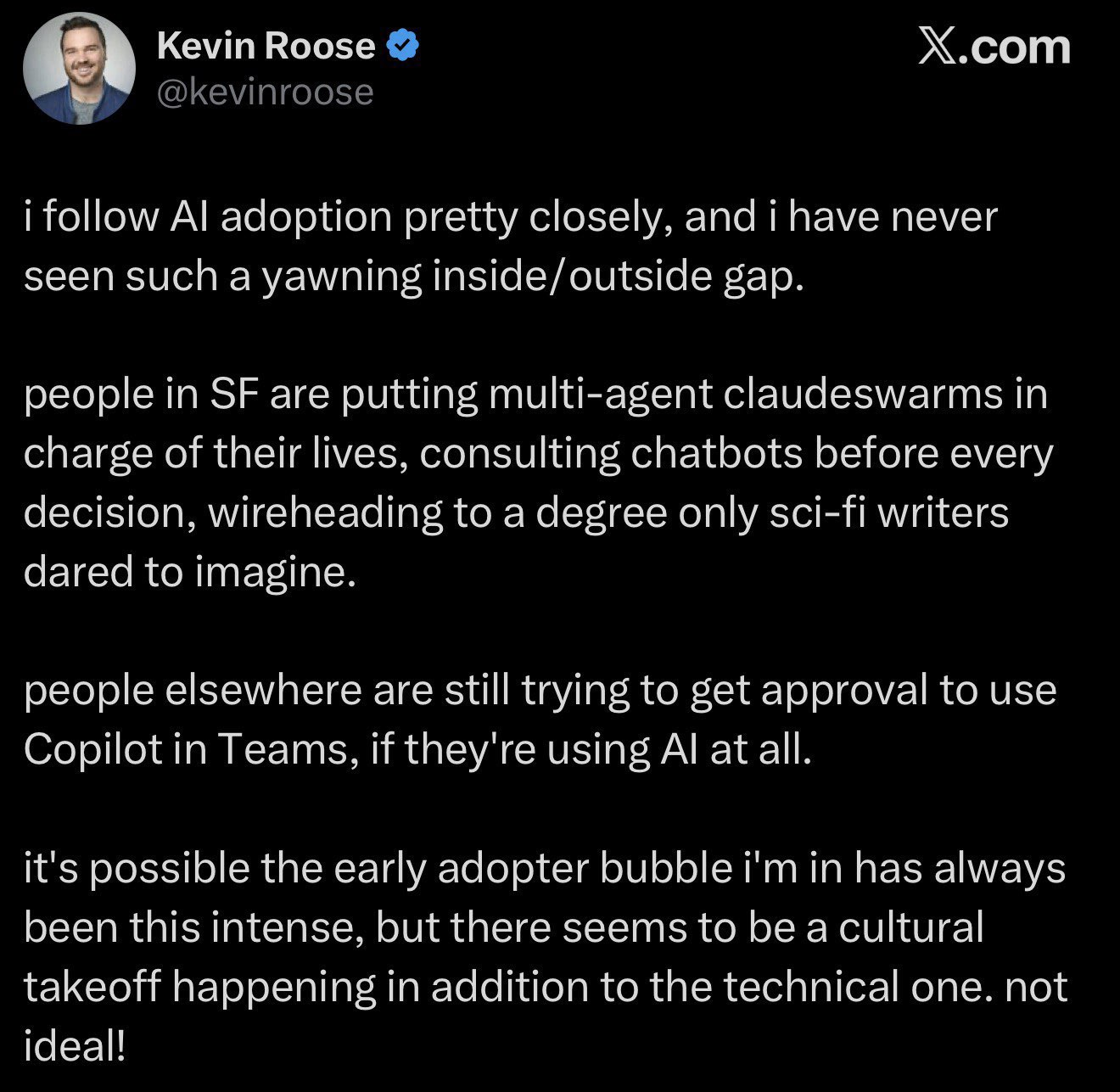
In 2026 Jensen Huang, CEO of Nvidia - the tech company that your parent friends are weirdly talking about.
If that $500,000 engineer did not consume at least $250,000 worth of tokens, I am going to be deeply alarmed
- Jensen Huang
I think that number is extreme to the point of hyperbole. It’s obviously in his best interest to ensure tokens are being used as heavily as possible, however this mentality of extreme spend in pursuit of extreme results does exist elsewhere in FAANG.
I work at a smaller company. Dominant in it’s niche, but isn’t a household name yet. I don’t think it will be inappropriate to say that we are considerably more conservative around AI spend. We are on periodic and weekly quotas with the option to enable extra usage given a reasonable business case justification.
As mentioned, the gains I have seen outside of work have been incredible, so this limitation is admittedly quite frustrating. I can only liken this feeling to a chef that gets knives that dull quickly at work, but having high quality long lasting steel at home.
To find out how other companies are using AI tools on their software teams, I queried a few friends.
Meta lets us use all the AI services and has a dashboard where you can see how much you have spent in tokens. I am only at ~$750 a month, one of my coworkers is closer to ~$2k per month.
That number seems outrageous to me. Annualized, if that spend went to my salary, I would see over a 10% bump in income. Business wise, its pretty unreasonable to except a 10% increase in R&D expenditures for a tool with mixed value.
The quality of the tool varies in different workplaces as well. While some companies have access to whatever tool they may desire with their own API key to use with abandon, other companies are extremely strict about the model used, harnessing tool, or use-case.
I discussed this with another friend who mentioned they have access to copilot only. This person is willing to discount the capabilities of LLM related tools since they have limited efficacy in his usecases.
I also would like to emphasize how foreign LLMs are as a technology and how they do not neatly fit in to the SDLC. Software engineering at many companies are about repeatable processes and reproducible results. The nature of LLMs isn’t particularly agreeable to this.
I do not believe that there is any “fixing” this issue with LLMs. I think similar to tech pioneered at the big name companie, it will take time for the smallest players to catch up. The most we can hope for is prices coming down, or an increase in the ability to run self hosted models.